Seat tube angle
A slacker seat tube pushes your hips behind the pedals, which feels relaxed on flat ground and weak on a climb. It is fixed at the factory and cannot be adjusted afterward.
Choosing, fitting and paying for upright, relaxed-position bicycles for short recreational and errand riding
The comfort label describes a riding position, not a price bracket, and the differences in frame angle, bar height and wheel size decide what the bike costs you later.
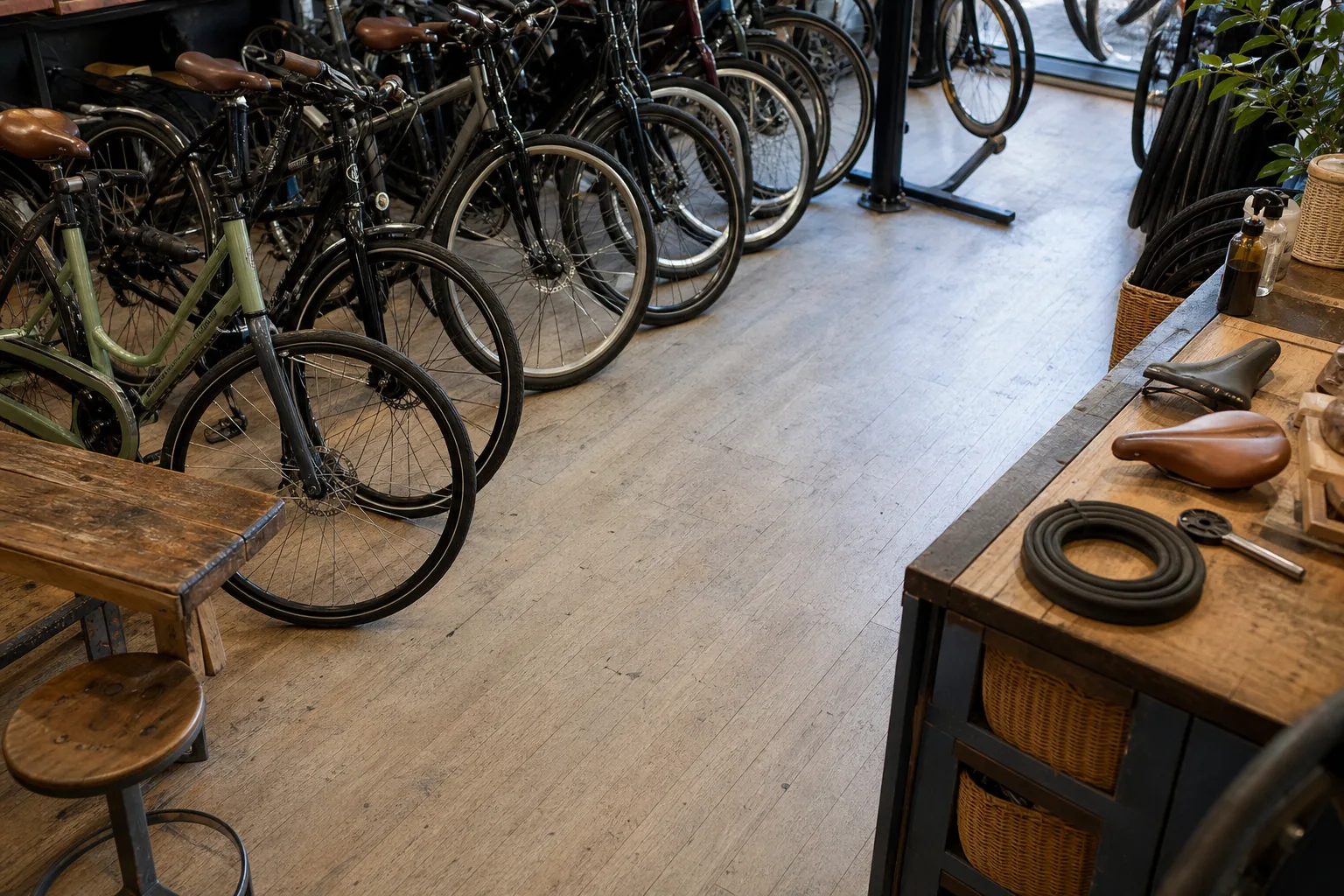
Measure how far the handlebar grips sit above or below the top of the saddle while the bike stands level. That single number separates a hybrid from a comfort frame from a roadster faster than any spec sheet.
The word on the hang tag is doing less work than it appears to. Comfort, as bicycle shops use it, describes a set of geometry decisions that put the rider's torso closer to vertical, the hands higher than the saddle, and the feet slightly forward of where a road bike would place them. Two bikes wearing the same label can arrive at that position by different routes, with different consequences at the forty-minute mark. The label tells you the destination. It says almost nothing about the road taken, and the road taken is what you feel.
A hybrid is a flat-bar bike built on road-adjacent geometry: a seat tube somewhere near seventy-three degrees, a head tube steep enough to steer quickly, and a reach that still asks you to lean forward maybe twenty or thirty degrees off vertical. A comfort bike slackens both angles a little, shortens the top tube, and raises the bar so the lean drops toward ten or fifteen degrees. A cruiser goes further still, with a long wheelbase, a very slack seat tube, and swept-back bars that put you fully upright with your weight behind the crank. A Dutch roadster is upright too, but achieves it with a tall head tube and a heavy loop frame rather than by pushing the saddle rearward.
Those differences show up in three places you can measure in the shop without any special tools. Stand the bike up, and see how far the grips sit above the saddle top: a hybrid is usually level or slightly below, a comfort bike an inch or two above, a roadster four or more. Sit on it, and notice whether your hips are over the bottom bracket or behind it. Then look at where the front wheel is relative to your hands. The further forward it sits, the calmer the steering and the slower the bike will feel through a tight turn into a driveway.
Most of these bikes come on 700c or 26-inch wheels, and the choice is not neutral. A 700c wheel rolls over expansion joints and root heave with less deflection, holds speed better once you have it, and suits riders tall enough that the frame does not end up with a comically short head tube. A 26-inch wheel, which cruisers and many comfort frames still use, lets the designer keep the standover low and the bar high without stretching the frame, and it takes a fat balloon tire that does more for pavement chatter than any suspension part in this price range. The practical version of the question is whether you want the bike to feel quick or to feel planted, because you will not get both.
Tire clearance matters more than the rim diameter, honestly. A frame that swallows a 45mm tire at low pressure is a fundamentally different machine from one capped at 32mm, and clearance is the single hardest thing to change after purchase. Fork crown, chainstay bridge and fender line are all fixed. Everything else on the bike is a part you can swap. Shops that stock a broad range of Comfort Bikes tend to show the clearance difference plainly if you look at two frames side by side, which is worth doing before you look at any price.
The purchase price is the smaller number. The larger one is what the geometry commits you to. A hybrid bought for errand riding will usually need a taller stem, a shorter one, or a swept bar, and that is a modest parts-and-labor charge at a shop, in the range of a nice dinner rather than a mortgage payment. A cruiser bought for a hilly commute needs a different drivetrain, which is not a modest charge and often is not possible at all on a single-speed rear hub with a coaster brake. A Dutch roadster bought without checking the weight will cost you nothing in dollars and a great deal in willingness, because a fifty-pound bike that lives up a flight of stairs gets ridden about twice.
The reversible adjustments are saddle height and fore-aft, stem height and length, bar sweep, grip shape, and tire width within the frame's clearance. The irreversible ones are the seat tube angle, the head tube length, the wheelbase, the standover, and the frame material. Anything on the second list that is wrong when you buy will still be wrong in three years. That is the whole test, and it is why a bike that fits the riding you actually do at a moderate price is a better buy than a better-specified bike in the wrong shape.
Trips under three miles, mostly flat, with stops: the upright shapes win, because visibility in traffic and the ease of putting a foot down matter more than efficiency. Trips of six or eight miles on a rail trail: a comfort geometry with 700c wheels and real gearing keeps you from working against the wind with a chest like a sail. Rolling terrain of any kind: gear range beats everything, and a bike with a wide-range cassette and a low first gear will get ridden when a prettier single-speed will not. The Consumer Product Safety Commission sets the requirements bicycles sold in the United States must meet, which covers brakes and reflectors and assembly, but it does not decide whether the bike suits your hill.
Buy the position first, then the parts. Sit on four bikes, note where your hands land relative to the saddle on each, and pick the one where you are still comfortable in the last ten minutes of the test ride rather than the first two.